Organic Mattress Guide
What to Look for in a Naturepedic Organic Mattress
Choosing an organic mattress is about more than a reassuring label. Materials, certifications, firmness, construction, and everyday practicalities all shape how a bed feels and performs. Here’s how to assess Naturepedic options thoughtfully—and compare the details with your own comfort needs.
Published October 15, 2026
Shopping for a mattress can turn into a vocabulary lesson surprisingly quickly. One product page may mention organic cotton, another may highlight latex, wool, coils, or a long list of certifications. Naturepedic’s organic mattress range is best approached the same way as any substantial home purchase: look beyond the headline claims and ask what the construction is, what each layer contributes, and whether the finished mattress suits the way you sleep.
“Organic” can tell you something meaningful about particular materials and how they were produced, but it does not automatically tell you whether a mattress will feel comfortable, provide the right support, or fit your bed. Those questions depend on a combination of design and personal preference. A careful comparison connects the label to the details: which components are certified, how the layers are arranged, what firmness choices are available, and what care the mattress requires.
This guide offers a practical framework for evaluating a Naturepedic organic mattress without treating any single feature as a guarantee of better sleep. Use it to narrow your priorities, read specifications with confidence, and identify the questions worth asking before you decide.
Start with the materials, not the headline
An organic mattress is made from multiple components, and the word “organic” may apply to some materials rather than every part of the finished product. Start by identifying the actual layers. The cover, comfort layer, support core, adhesives, fire barrier, and interior textiles may all be described separately. Product information should make it possible to understand which materials are used and where they sit in the mattress.
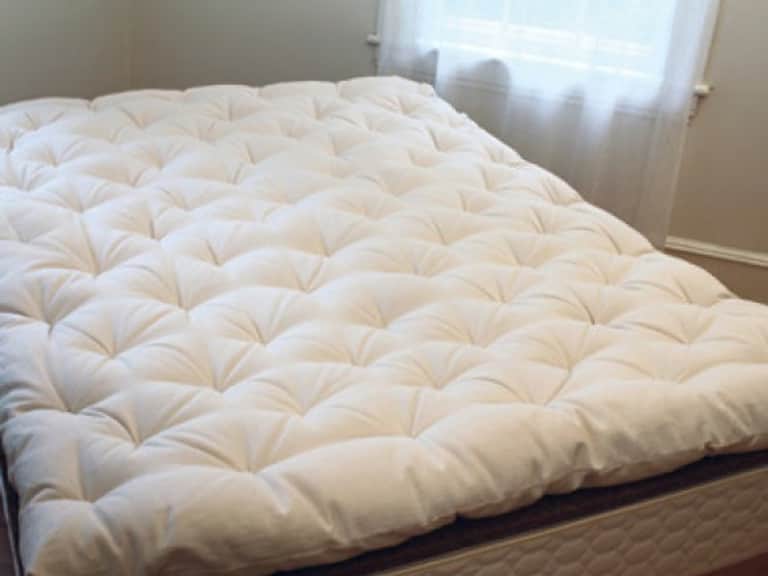
For each material, consider both its role and its origin. Organic cotton, for example, may be used in a fabric cover or as part of a batting layer. Natural latex may provide cushioning and pressure relief, while an innerspring unit can supply a responsive support core. Wool may appear as upholstery or as part of a fire barrier, depending on the model. These components are not interchangeable: they influence feel, breathability, resilience, weight, and care requirements in different ways.
Look for clear descriptions rather than relying on broad phrases such as “natural,” “eco-friendly,” or “chemical-free.” Such terms can sound definitive while leaving important questions unanswered. A useful product specification names the material, explains its location in the mattress, and indicates whether a certification applies to that material or to a larger part of the product.
- Cover and ticking: Check the fabric content and whether the cover is removable or intended to remain in place.
- Comfort layers: Identify the materials that cushion the body and consider how their thickness may affect the surface feel.
- Support core: Determine whether the mattress uses latex, coils, or another structure, and how that construction relates to your preferred feel.
- Fire barrier and binders: Review the stated materials and any relevant safety or material certifications.
- Finishing details: Ask about quilting, stitching, adhesives, and other components if the information is not readily available.
Materials also have trade-offs. A natural fiber surface may feel different from a smooth synthetic textile, and a latex comfort layer may respond differently from a coil-based design. No material is automatically right for every sleeper. The aim is to understand what you are considering, then decide whether those characteristics match your comfort preferences, household needs, and expectations for upkeep.
Read certifications with a precise eye
Certifications can help shoppers verify particular claims, but they are not all-purpose endorsements. Each program has its own scope and criteria. One certification may relate to the organic status of a textile fiber; another may assess emissions or restrict certain substances in a finished product. A certification on one component should not automatically be interpreted as applying to every layer or to the entire mattress.
When reviewing a Naturepedic product, find the exact certification name and ask what it covers. Is it associated with the cotton, latex, wool, or another ingredient? Does it apply to the finished mattress or only to a material supplier? Is the listed certificate current and relevant to the particular model and size you are considering? If a product page uses certification language without clarifying scope, consult the brand’s supporting documentation or contact customer service for specifics.
It is equally important to separate material certification from performance claims. A certification may support a claim about sourcing or emissions, but it does not establish that a mattress will relieve pain, prevent allergies, or improve sleep for every person. Those outcomes are personal and can depend on factors beyond the mattress, including sleep position, body shape, room temperature, health, and bedding.
A useful question: “What exactly is certified, and where can I see the certification’s scope?” A clear answer is more informative than a long badge list with no explanation.
Certification names can also change over time, and a product’s composition may vary by model or production run. For the most reliable picture, use current documentation from the manufacturer rather than assuming that a certification mentioned in a general article applies to every mattress in a collection.
Understand construction and how it affects feel
Two organic mattresses can use some of the same materials and still feel markedly different. The arrangement, thickness, and density of the layers influence how quickly the surface responds, how much cushioning it provides, and how supportive the bed feels beneath the body. A mattress with a soft upper layer over a firmer core may feel different from one with a more uniform construction, even if their material lists look similar.
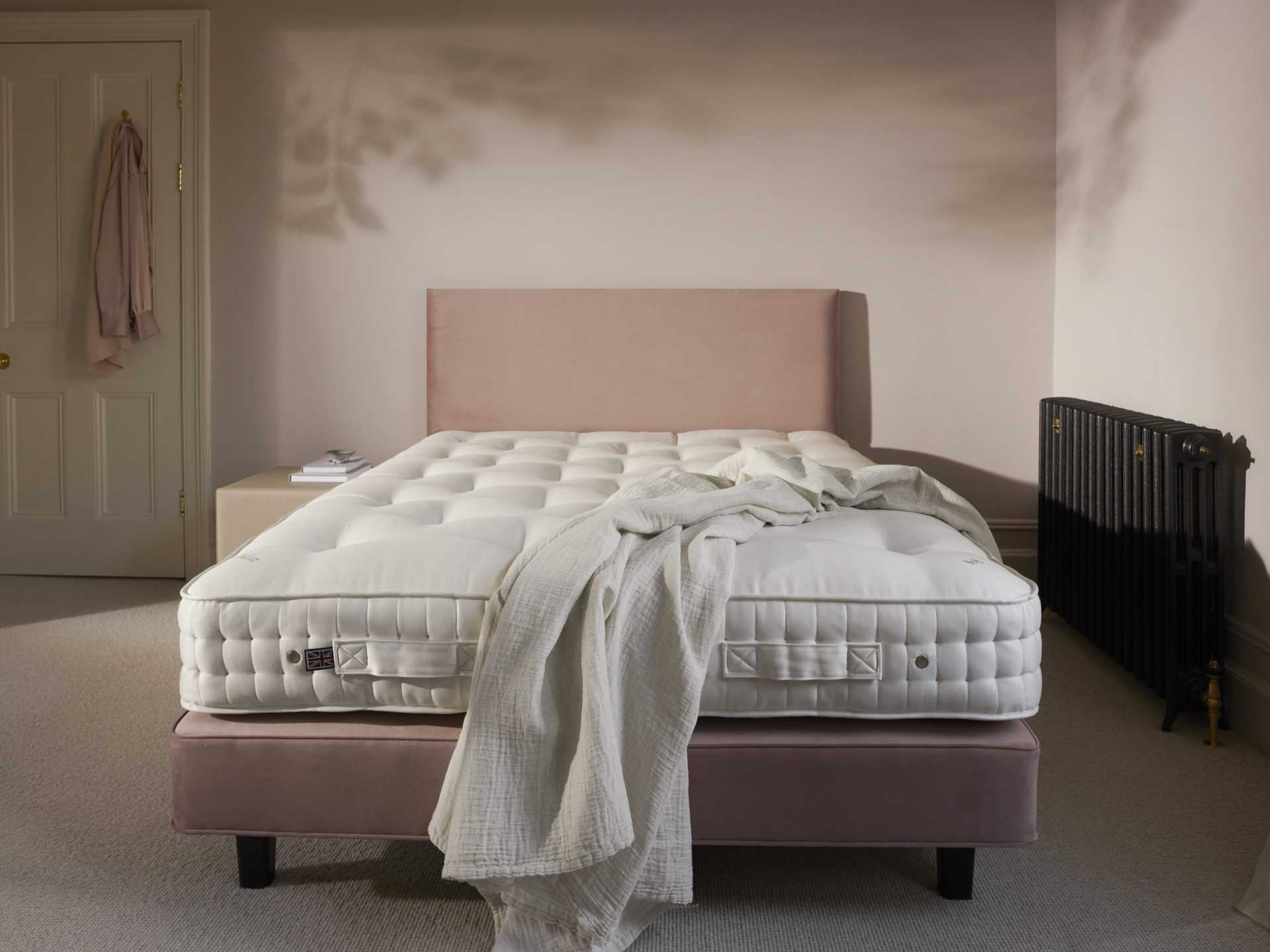
Naturepedic models may vary in construction, so examine the specifications for the exact product rather than generalizing across the brand. Look for details on the support system, comfort layers, zoning if present, and the mattress’s overall profile. If coils are included, check whether the design is described as individually wrapped or uses another arrangement. If latex is used, see whether the product information identifies the type and placement of the latex. These details help translate a materials list into a more useful picture of the sleeping surface.
Construction can also affect how the mattress interacts with movement. A responsive support system may make it easier to change positions, while a more cushioning surface may create a different sense of contour. Couples may want to consider how motion feels across the bed, but written descriptions are only a starting point. When possible, test the mattress in person or use a trial period to evaluate it at home.
Edge support is another practical construction detail. It can influence how stable the perimeter feels when sitting on the edge or using the full width of the mattress. The quality of edge support depends on the design, not simply on whether a mattress is organic. Review product specifications and, if shopping in person, sit and lie near the edge to see how it feels to you.
Choose firmness around your own comfort
Firmness is one of the most personal parts of mattress selection. Terms such as “plush,” “medium,” and “firm” are not perfectly standardized across brands, and they describe an overall impression rather than a universal measurement. A medium option from one manufacturer may feel different from a medium option elsewhere. When comparing Naturepedic choices, use the brand’s descriptions as a guide, then focus on how the mattress supports your body in your usual sleeping positions.
Side sleepers often pay particular attention to pressure at the shoulders and hips. Back sleepers may prioritize a surface that feels supportive while allowing comfortable contact through the torso and lower back. Stomach sleepers may prefer a firmer-feeling surface, though individual needs vary. Combination sleepers can look for a design that feels comfortable in more than one position and allows movement without a feeling of being stuck.
Body weight and body shape can change how a mattress feels. A person who compresses the surface more deeply may experience a model as softer than someone with a lighter build. This is one reason why another person’s review—even a thoughtful one—cannot predict your own experience with certainty. Couples should consider whether each sleeper has similar needs and whether the mattress offers a suitable compromise.
- Think about the positions in which you spend most of the night, not only the position in which you fall asleep.
- Notice pressure points, ease of movement, and whether you feel adequately supported when lying still.
- Check whether the firmness description refers to a particular configuration or can vary by model.
- Review trial-period terms before purchase, including return fees, pickup requirements, and the minimum time you must keep the mattress.
It may take time to adjust to a new mattress, particularly if its construction differs from your old one. Still, persistent discomfort is worth taking seriously. A return or exchange policy can reduce uncertainty, but only if you understand the conditions before ordering. Keep documentation and follow the stated care instructions during any trial period.
Match mattress height to your bed setup
Mattress height is easy to overlook when the focus is on materials and feel. Yet a mattress that is too tall or too short for your preferences can change how the bed looks, how easily you get in and out, and whether existing sheets fit. Before choosing a Naturepedic model, confirm its listed height and compare that measurement with your current mattress, foundation, and bedding.
Measure the full bed height from the floor to the top of the mattress if accessibility matters. The combined height includes the frame, foundation or platform, and mattress—not just the mattress profile. A thicker mattress may require deep-pocket sheets, while a thinner design may not hold standard fitted sheets securely. Check fitted-sheet pocket depth and any mattress-protector dimensions rather than relying solely on the size label.
Also make sure the bed base is compatible with the mattress. Different constructions can have specific support requirements, such as the type of foundation, spacing between slats, or the use of a platform. Confirm these requirements in the manufacturer’s current care and warranty documentation. A compatible foundation helps the mattress perform as intended and may be necessary for warranty coverage.
For adjustable bases, verify compatibility for the exact model and size. Not every mattress is designed to bend with an adjustable frame, and compatibility can depend on construction. If you have a split king, unusual frame dimensions, or a specialty foundation, ask the manufacturer to confirm fit before placing an order.
Consider care before bringing it home
Organic materials do not necessarily mean low-maintenance materials. A mattress is a substantial item, and its care needs depend on its construction and cover design. Read the instructions before purchase, especially if you expect to remove the cover, rotate the mattress, or use a particular cleaning method. Some covers are not intended to be taken off or machine-washed, even when they contain cotton or other familiar fibers.
A well-fitted mattress protector can help reduce exposure to spills, perspiration, and everyday soil. Choose one that fits the mattress depth and does not create a surface feel you dislike. A breathable protector may preserve more of the mattress’s original feel than a bulky or crinkly layer, but performance and care instructions differ by product. If you use an encasement, confirm that it is sized for the mattress profile and does not interfere with the fit of sheets.
Follow the manufacturer’s guidance about rotating or turning the mattress. Some designs are intended to be rotated; others may be one-sided and should not be flipped. Avoid assuming that traditional advice applies to every construction. Keep the room adequately ventilated, address spills promptly according to the instructions, and allow bedding to air when practical.
Warranty coverage is also worth reading closely. It may specify the required foundation, acceptable use, or conditions for a claim. Understand what counts as a defect, what documentation is needed, and whether transportation or inspection costs could apply. A warranty is not a promise that a mattress will retain an identical feel indefinitely, so it helps to distinguish manufacturing defects from ordinary changes associated with use.
Compare value without reducing it to a price tag
Organic mattresses can have different price points because of variations in materials, construction, dimensions, and manufacturing. A higher price does not automatically mean a better personal fit, and an attractive certification list does not answer every comfort question. To compare value fairly, look at the full specification, the expected care routine, warranty terms, trial policy, delivery arrangements, and the mattress’s fit with your bed setup.
It may help to create a short comparison sheet for the Naturepedic models under consideration. Record the firmness options, mattress height, main materials, support construction, certifications and their scope, foundation requirements, and care instructions. Add practical costs such as delivery, removal of an old mattress, taxes, or return fees. This turns a dense collection of product pages into a clearer decision.
If you are also comparing organic mattresses from other manufacturers, use the same questions for each. “Organic” does not describe one uniform construction, so compare like with like where possible. A latex mattress, an innerspring design, and a hybrid may all contain organic materials while offering distinct support and surface feels.
A final checklist before choosing
Before deciding on a Naturepedic organic mattress, take a moment to confirm the details that matter most to your household. A thoughtful choice is rarely about finding a universally perfect bed; it is about finding a construction, feel, and care routine that align with your needs.
- Materials: Can you identify the components and their positions within the mattress?
- Certifications: Is it clear which materials or product elements each certification covers?
- Construction: Do you understand the support core and comfort layers well enough to compare them?
- Firmness: Have you considered your usual sleep positions, pressure points, and personal preferences?
- Dimensions: Will the height and size work with your frame, foundation, sheets, and protector?
- Compatibility: Does your bed base meet the manufacturer’s requirements?
- Care: Are the cleaning, rotation, and protection instructions practical for your home?
- Policies: Have you read the current trial, return, delivery, and warranty terms?
The bottom line
Evaluating a Naturepedic organic mattress starts with specifics. Identify the materials in each layer, check what the certifications actually cover, and learn how the construction may affect responsiveness, cushioning, and support. Then bring those facts back to the questions that matter in everyday life: Does the firmness suit your sleep positions? Will the height work with your bed? Can you care for it as directed? Are the trial and warranty terms clear?
These checks replace broad marketing impressions with a practical, personal comparison. An organic label can be a useful part of your decision, but comfort and compatibility still deserve equal attention. When the materials, design, and policies are clearly understood, you can choose with greater confidence—and with a better sense of what to expect once the mattress is part of your bedroom.